Time: 31 Jul 2026
Author: Tianci Sales Team
Zhengzhou Tianci Heavy Industry Machinery Co., Ltd. was established in 2000. Its predecessor factory, founded in 1995, is located in Xingyang City, Zhengzhou, Henan Province, China. The company specializes in the R&D, manufacturing, and turnkey engineering services for fertilizer production equipment, providing customized solutions—from raw material processing to finished product packaging—for organic fertilizer plants, compound fertilizer plants, livestock farms, agricultural cooperatives, and solid organic waste treatment projects.
After more than two decades of development, Tianci Heavy Industry has established a comprehensive equipment system covering processes such as fermentation, crushing, batching, mixing, granulation, drying, cooling, screening, coating, and packaging. Based on the customer’s raw material properties, product formulations, target output, site conditions, and investment budget, the company can configure projects such as organic fertilizer production lines, NPK production lines, compound fertilizer production lines, BB fertilizer production lines, powdered organic fertilizer production lines, and disc granulation production lines.
The organic fertilizer production line primarily processes organic waste—such as chicken manure, cow manure, pig manure, sheep manure, sludge, crop straw, fungal residue, distillers’ grains, and oilseed meal—into granular organic fertilizer that is easy to store, transport, and apply mechanically.
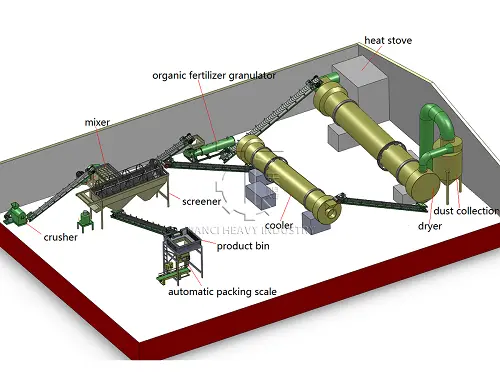
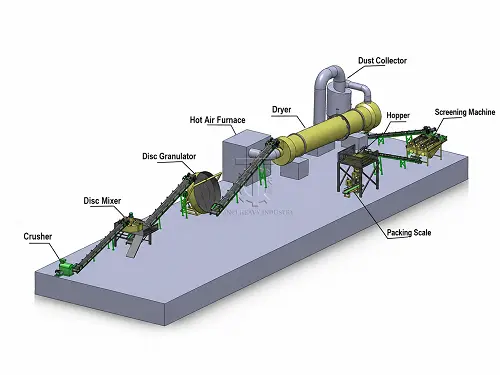
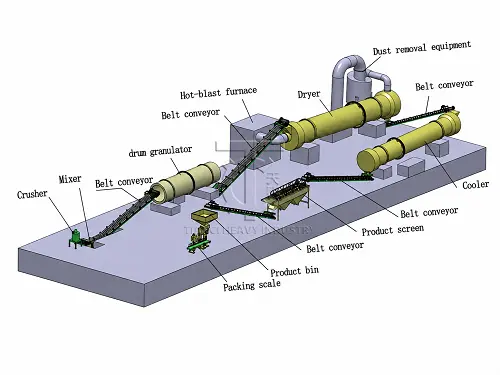
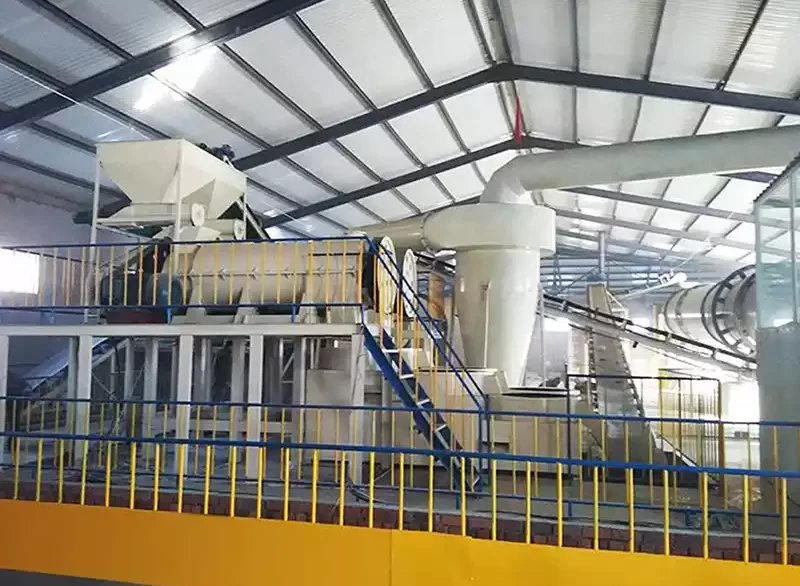
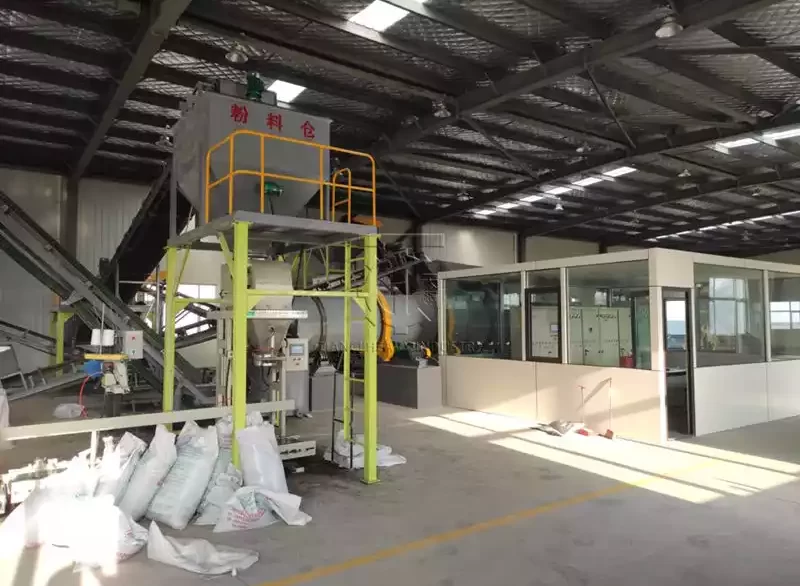
The complete production process generally includes raw material fermentation, crushing, batching and mixing, granulation, drying, cooling, screening, and packaging. Depending on the organic matter content, fiber structure, and target particle size of the raw materials, the line can be configured with new-type organic fertilizer granulators, disc granulators, drum granulators, flat die granulators, or ring die granulators. The typical production capacity of a complete line ranges from 1 to 8 metric tons per hour, with finished granule sizes usually between 2 and 10 millimeters; under optimal operating conditions, the granulation rate can exceed 90%.
This production line is suitable for organic fertilizer processing plants, large-scale livestock farms, and agricultural waste treatment projects. It not only alleviates the problems of manure and straw stockpiling but also transforms composted raw materials into marketable organic fertilizer products.
The NPK fertilizer production line is used to process compound fertilizers containing nutrients such as nitrogen, phosphorus, and potassium. It can utilize raw materials such as urea, ammonium sulfate, ammonium chloride, monoammonium phosphate, diammonium phosphate, potassium chloride, and potassium sulfate, and can incorporate humic acid, trace elements, and fillers according to the formulation.
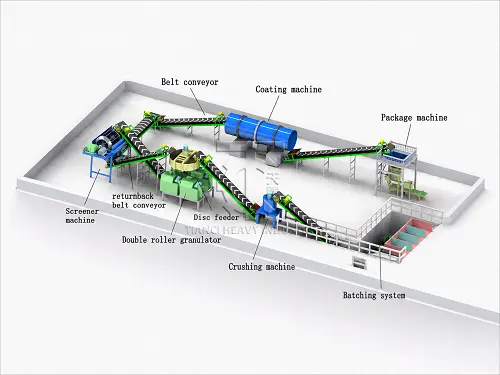
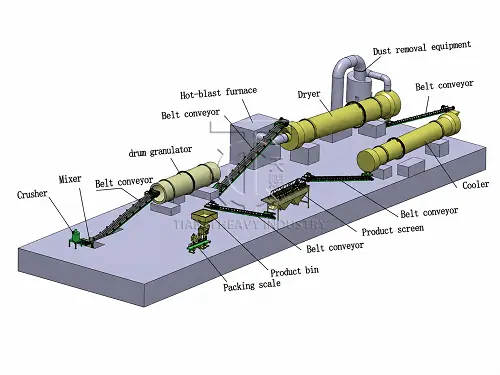
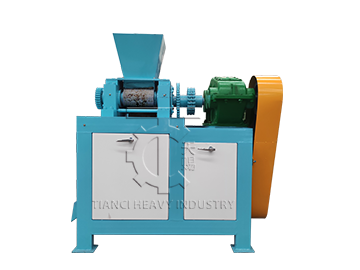
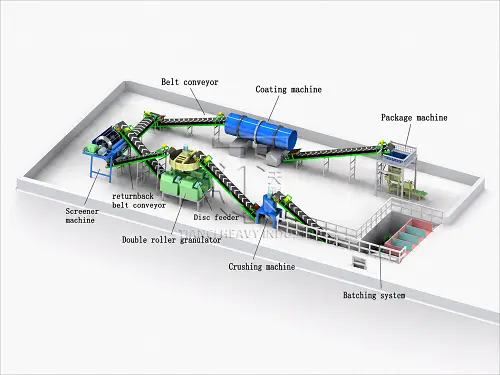
Depending on production scale and product requirements, NPK production lines can employ double roller extrusion, wet drum granulation, or disc granulation processes. Among these, double roller extrusion production lines typically have a capacity of 1–10 metric tons per hour. They directly compress powdered materials into 2–10-millimeter granules using mechanical pressure. Generally, they do not require a dryer or cooler and are characterized by a short process flow, low energy consumption, and a small footprint, making them suitable for small- and medium-sized NPK fertilizer projects.
The entire line can be equipped with an automatic batching system, a urea crusher, a mixer, a twin-roll granulator, a screen, a coating machine, and an automatic packaging machine. The PLC system controls batching ratios and equipment operation, thereby improving the stability of the product’s nutrient content.
Compound fertilizer production lines primarily employ the rotary drum wet granulation process, making them suitable for medium- to large-scale continuous fertilizer production projects. Their typical production capacity ranges from 3 to 20 metric tons per hour, with finished granule sizes generally between 2 and 10 millimeters. These lines can be used to produce NPK compound fertilizers and organic-inorganic compound fertilizers with various formulations.
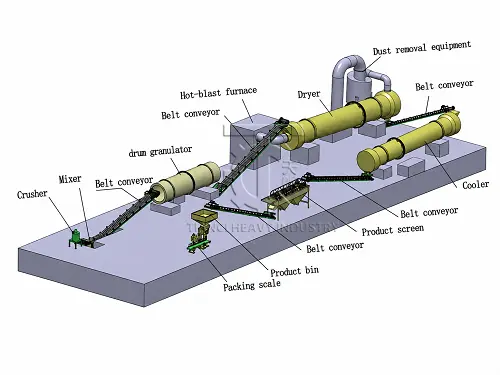
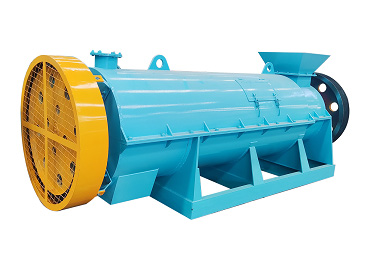
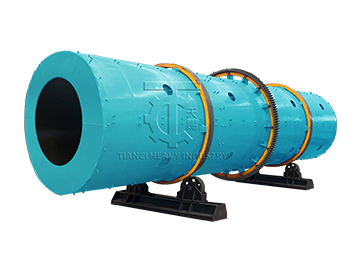
During production, various powdered raw materials are automatically metered according to the formulation. After grinding and mixing, they enter the rotary drum granulator. Inside the rotating drum, the materials continuously roll and agglomerate through the injection of water, steam, or an appropriate amount of binder, forming relatively round granules. The granules then undergo drying, cooling, screening, coating, and packaging to produce compound fertilizer with uniform particle size, high strength, and ease of storage and transportation.
The drum-type compound fertilizer production line features high output and strong continuous operation capabilities, making it suitable for large-scale compound fertilizer enterprises with relatively stable product formulations and high requirements for granule appearance and large-scale production. If you are planning a small- to medium-sized production project, you may also opt for an NPK production line or a disc granulation production line.
The BB fertilizer production line, also known as a blended fertilizer production line, primarily measures, mixes, and packages different nutrient granules—such as urea, ammonium phosphate, potassium chloride, potassium sulfate, and granular compound fertilizers—according to predetermined ratios. Since the raw materials are already qualified granules, the production process typically does not require crushing, granulation, drying, or cooling.
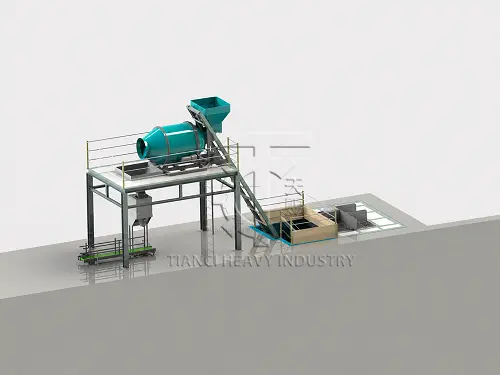
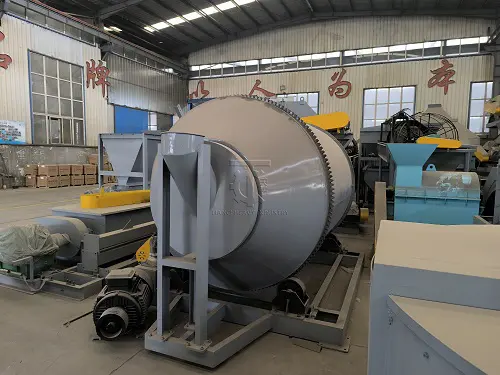
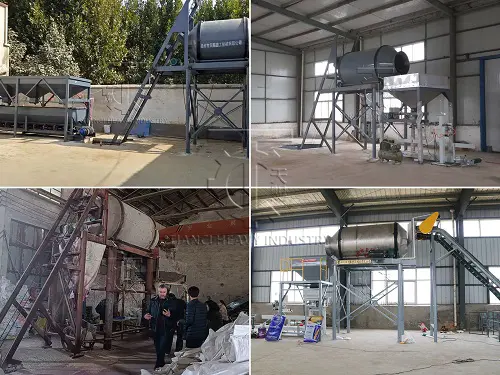
The entire line primarily consists of raw material silos, an automatic batching system, conveying equipment, a BB fertilizer mixer, an automatic packaging machine, and a control system. Typical production capacity ranges from 5 to 30 metric tons per hour. The equipment employs a gentle mixing method that minimizes granule breakage and the segregation of materials with different particle sizes, ensuring a more consistent formulation for each bag of fertilizer.
The BB fertilizer production line features a streamlined process, a compact footprint, and low energy consumption. It allows for rapid switching between product formulations, making it suitable for regional fertilizer blending centers, agricultural supply companies, and projects requiring the production of specialized fertilizers for various crops.
The powdered organic fertilizer production line is used to process fully decomposed livestock and poultry manure, crop straw, fungal residue, sludge, and distillers’ grains into uniform powdered organic fertilizer. The main process includes fermentation, feeding, grinding, blending, screening, and packaging; it does not require granulation, drying, or cooling equipment.
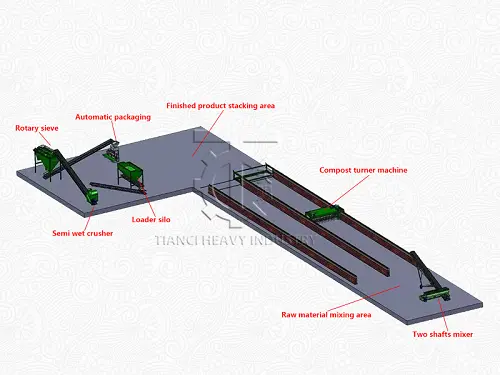
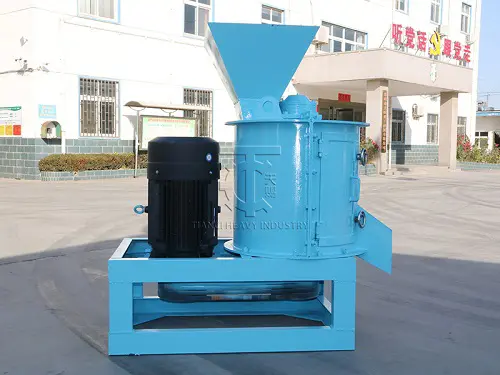
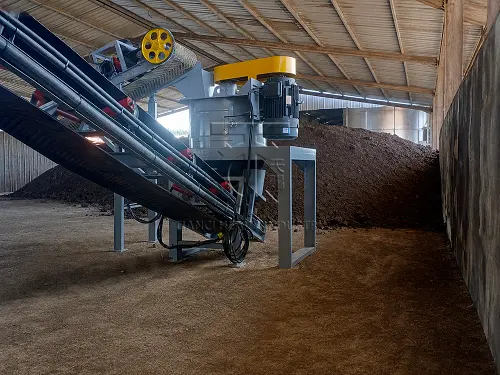
The typical production capacity of a complete line is approximately 1–10 metric tons per hour. It can be configured with a tracked compost turner, a trough-type compost turner, or a vertical fermentation tank, and is equipped with a forklift-fed hopper, a semi-wet material grinder, a horizontal mixer, a drum screen, and an automatic packaging machine.
Compared to granular organic fertilizer production lines, powdered organic fertilizer production lines require fewer pieces of equipment, involve relatively lower investment, and are easier to manage, making them suitable for livestock farms, small-scale organic fertilizer plants, and customers new to the fertilizer processing industry.
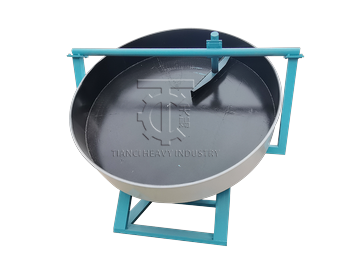
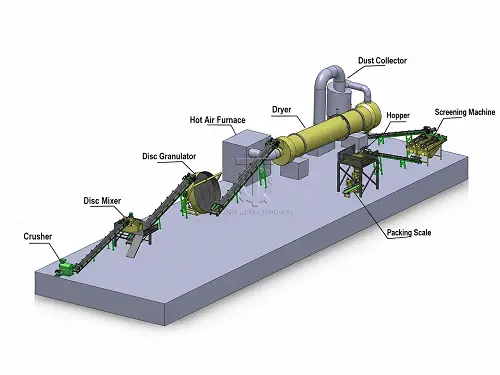
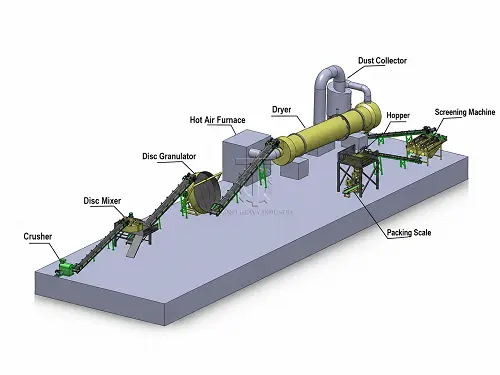
The disc granulation production line can be used for the granulation of organic fertilizers, compound fertilizers, NPK fertilizers, and certain mineral powders. The core equipment is the disc granulator; within the inclined, rotating disc, the material gradually forms spherical granules under the influence of moisture, cohesive force, and rolling action.
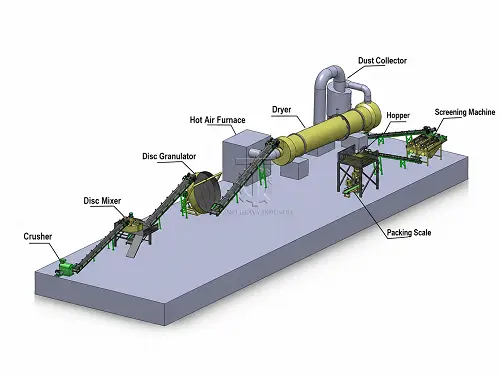
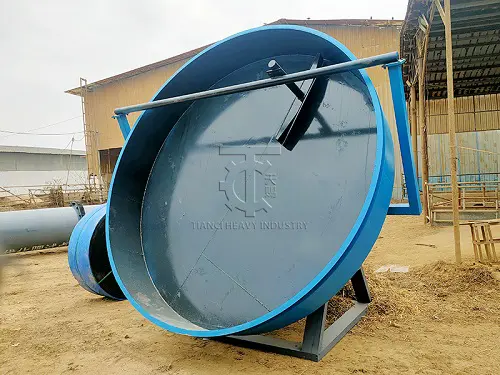
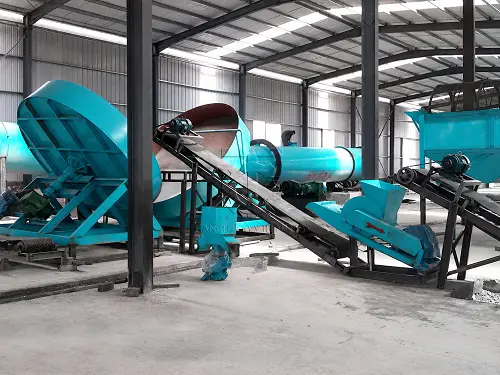
The typical production capacity of this line ranges from 0.5 to 8 metric tons per hour, and the finished particle size can be adjusted within the range of 2 to 10 millimeters. By adjusting the disc inclination angle, rotational speed, liquid spray volume, and feed rate, the particle size and granulation quality can be controlled. This production line features intuitive operation and flexible formulation adjustments, making it suitable for small and medium-sized fertilizer plants, multi-product production, and projects requiring frequent formulation changes.
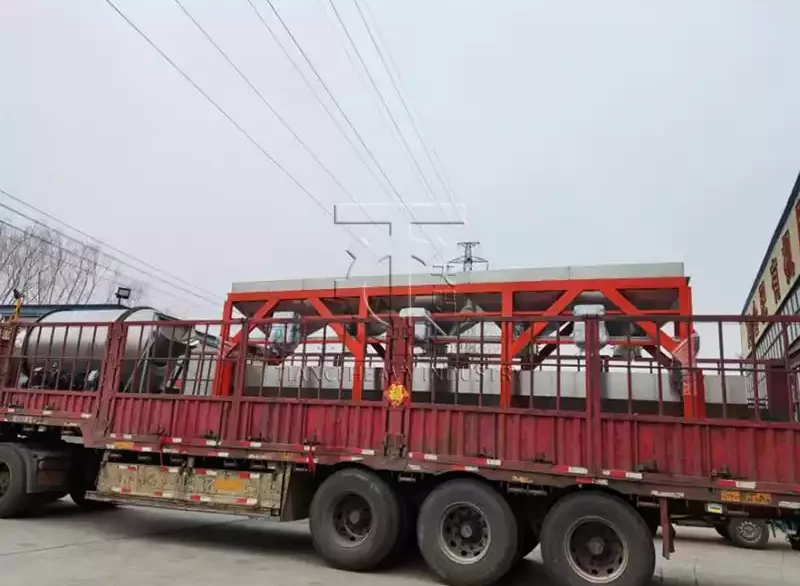
Tianci Heavy Industry possesses extensive experience in the R&D and manufacturing of fertilizer equipment, process design, and project implementation. Its products have been deployed in markets across Asia, Africa, the Middle East, South America, Europe, and Australia. The company not only supplies individual machines but also undertakes turnkey services, including process planning, equipment selection, plant layout, manufacturing and shipping, installation and commissioning, operator training, spare parts supply, and after-sales technical support.
Our engineers tailor designs to address the specific raw material moisture content, cohesiveness, climate, energy conditions, and environmental requirements of different countries and regions. For example, organic fertilizer granulation processes are suitable for well-decomposed materials with high organic matter content; NPK projects aiming to reduce energy consumption can adopt the twin-roll extrusion process; medium- to large-scale continuous production can utilize wet drum granulation; projects with multiple formulations and small batches may opt for disc granulation; and projects already using granular raw materials may configure a BB fertilizer production line.
Please provide us with your raw material type, target output, site size, and formulation requirements, and our engineers will provide you with a free, customized fertilizer production solution.