Time: 07 May 2026
Author: admin
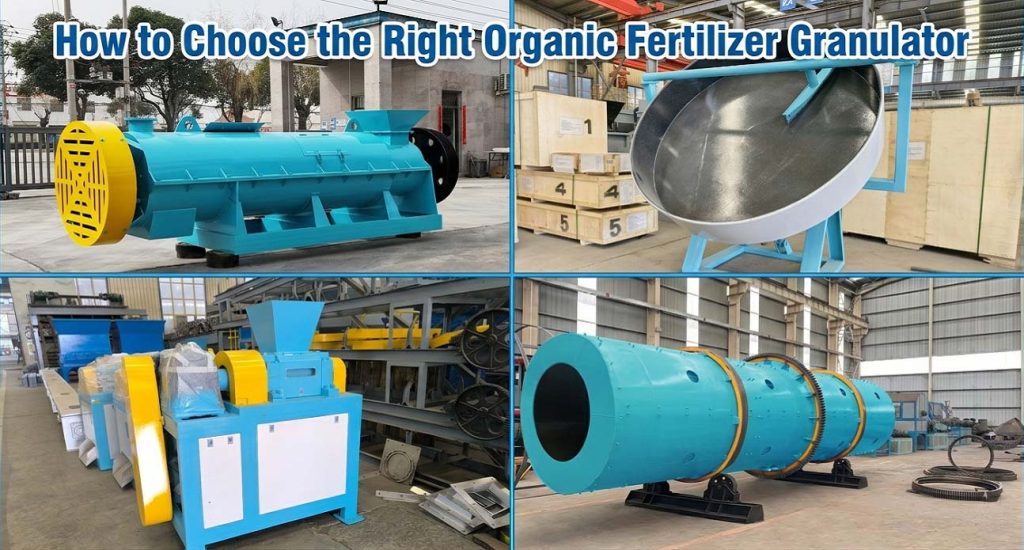
For many enterprises, livestock farms, or farming cooperatives new to the organic fertilizer industry, selecting an organic fertilizer granulator is often a daunting task. The market offers a wide variety of granulators, with prices ranging from tens of thousands to hundreds of thousands of yuan. Manufacturers all claim their equipment is superior, but after purchasing, some users find that the machines frequently clog, fail to form proper granules, or produce yields below expectations—or even cause the entire production line to malfunction. In fact, through our experience serving numerous organic fertilizer projects, we have found that over 70% of equipment issues stem not from machine quality but from mismatched equipment selection during the initial planning phase. There is no “one-size-fits-all” model for organic fertilizer granulators; there is only equipment suited to your specific raw materials and production needs. To avoid wasting money, you must comprehensively consider five key factors during the selection process: raw materials, production capacity, sales channels, budget, and equipment quality.
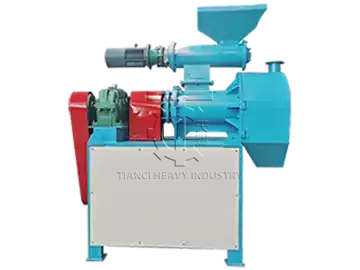
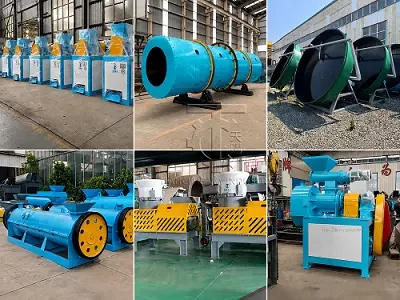
Through years of project experience, we have found that the vast majority of failed equipment selections are related to mismatched raw materials. For example, a livestock farm client used fermented chicken manure as their primary raw material. Seeing that the double roller granulator required a lower investment, they purchased and installed it directly. As a result, the high-moisture material frequently caused the rollers to jam upon entering the equipment, requiring the machine to be shut down for cleaning several times a day, leading to extremely low production efficiency. Subsequent raw material testing revealed that the moisture content of their chicken manure was nearly 35%, making it a typical high-moisture fermented material better suited for a wet-type stirring teeth granulator. After replacing the equipment, the granule formation rate improved significantly, and production returned to normal. Different raw materials require different equipment:
| Machine Model | Suitable Raw Materials | Raw Material Moisture Requirement | Granule Shape | Core Advantages | Suitable Business Entities |
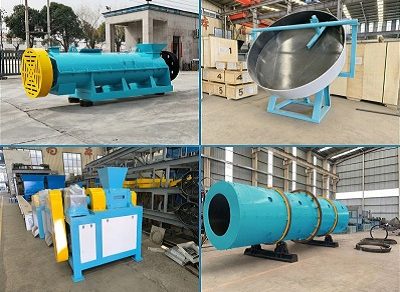
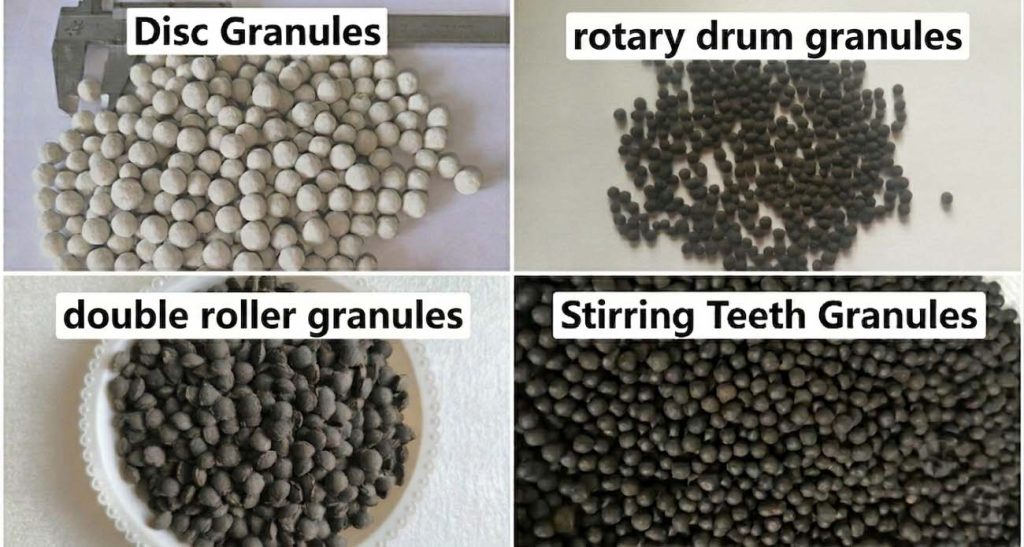
| Stirring teeth granulator | Fresh wet chicken manure, cattle manure, sheep manure, biogas residue | 28%~40%, (No pre-drying needed for feeding) | Near-spherical granules | Eliminates front-end drying; lowest production and operating costs | Livestock farms, small-to-medium manure treatment plants |
| Disc Granulator | Decomposed organic fertilizer | 22%~35% | Standard spherical granules | Best granule appearance; lowest single-machine purchase price | Planting cooperatives, premium organic fertilizer small workshops |
| Double Roller Granulator | Dry powder organic fertilizer, bio-bacterial fertilizer, humic acid powder | 10%~20% | Flat-round pillow shape | Full dry-process with no drying needed required; high granule hardness, resistant to storage and transport | Dry powder organic fertilizer processing plants, large-scale long-distance wholesale factories |
| Rotary Drum Granulator | All types of decomposed organic fertilizer | 20%~35% | Rounded agglomerated granules | Large single-machine capacity; supports 24-hour continuous mass production | Large-scale fertilizer factories with an annual output of over 50,000 tons |
Many customers believe that larger equipment is always better, but this is a common misconception. Oversized equipment not only increases procurement costs but also drives up facility, electricity, and maintenance expenses; conversely, undersized equipment will limit production capacity growth. The correct approach is to first calculate the actual hourly production requirement. For example, given an annual output of 20,000 tons of organic fertilizer, 300 production days per year, and 10 hours of operation per day, the actual hourly production requirement is approximately 0.7 tons. Under these circumstances, selecting a small-scale granulation unit with a capacity of 1–2 tons per hour is sufficient to meet the demand, and there is no need to invest directly in a large-scale drum production line. Matching capacity appropriately not only helps control investment risks but also improves equipment utilization.
| Production Scale | Hourly Output Range | Recommended Matching Models |
| Small-scale farms, small workshops for self-use | 0.3~1.5t/h | Disc granulator, Type 60 stirring teeth granulator |
| Small-to-medium livestock farms, small organic fertilizer processing plants | 2~5t/h | Type 80/100 stirring teeth granulator, Type 300/360 double roller granulator, Φ1.5m disc granulator |
| Medium-scale organic fertilizer processing plants | 5~10t/h | Type 120 stirring teeth granulator, Type 450 double roller granulator, Φ1.8m rotary drum granulator |
| Large-scale organic fertilizer factories, urban-rural organic waste treatment centers | Over 10t/h | Rotary drum granulators (Φ2.2m and above), Large double roller units |
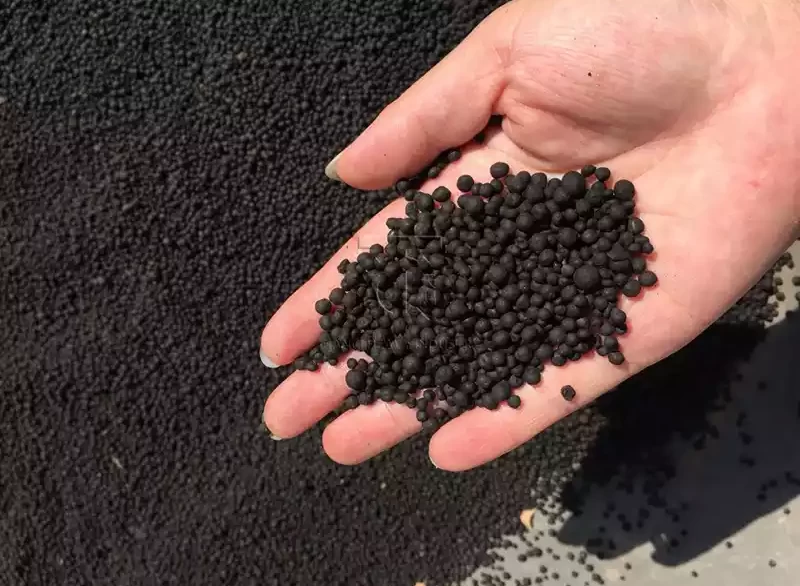
Many people focus solely on whether granulation is possible, yet overlook the market’s requirements for granule shape. In reality, different sales channels have distinct granule requirements:
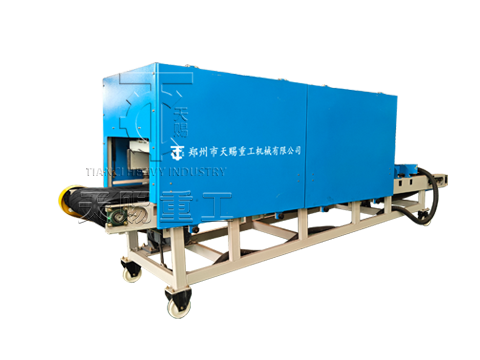
Many users focus primarily on equipment quotes when inquiring. In reality, the equipment price is only a portion of the total investment. Take the wet granulation process as an example: although standalone stirring teeth or disc granulators are less expensive, the granules they produce have a higher moisture content, typically requiring additional drying and cooling equipment. This can increase the investment for the entire production line by between 30% and 60%. In contrast, double roller granulators use a dry process that requires no drying equipment, resulting in lower long-term operating costs. Additionally, the following factors must be considered: whether the factory floor space meets installation requirements; whether the power supply is sufficient; the cost of replacing wear parts in the future; the difficulty of equipment maintenance; and the number of operators required. These hidden costs often warrant more attention than the equipment purchase price.
Prices for similar equipment on the market vary significantly, with core differences typically lying in materials, manufacturing processes, and after-sales service. For example: high-quality agitator teeth are usually made of high-chromium wear-resistant materials, whereas ordinary carbon steel teeth may need to be replaced within a few months; high-quality double roller mills use 65Mn alloy steel roll shells, offering superior wear resistance; reputable manufacturers equip their machines with hardened-tooth gear reducers and variable-frequency speed control systems, ensuring more stable operation. Beyond the equipment itself, the manufacturer’s service capabilities are equally important. A truly experienced equipment manufacturer does more than just sell equipment; it assists customers with raw material analysis, process design, plant layout planning, installation and commissioning, as well as post-installation technical training.
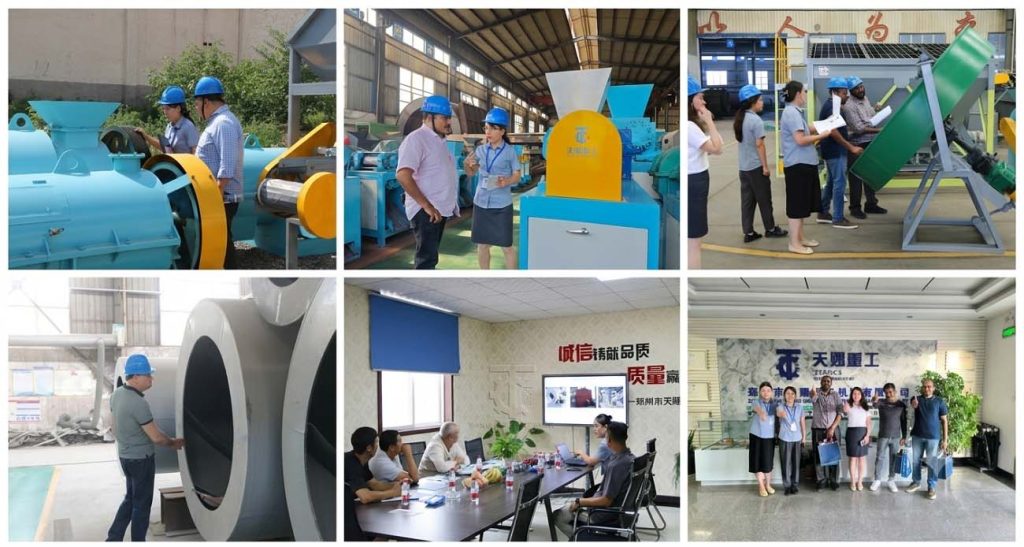
Take Tianci Heavy Industry as an example. With over two decades of deep expertise in fertilizer equipment manufacturing, we have participated in hundreds of fertilizer projects, serving clients across multiple countries and regions. In actual projects, we consistently prioritize raw material analysis before designing solutions, rather than simply recommending equipment models. Only a solution that truly matches the client’s needs can help them achieve long-term, stable production.
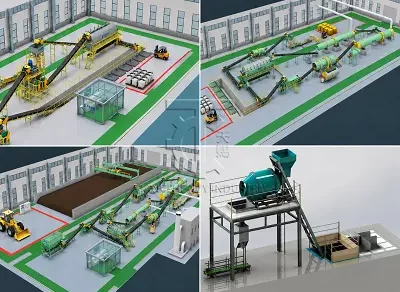
Choosing an organic fertilizer granulator is not merely about selecting a machine; it is about selecting a production solution tailored to your specific development needs. Different raw materials, production capacities, and sales channels all result in completely different equipment configurations. We recommend thoroughly understanding your raw material characteristics and production goals before purchasing. If necessary, conduct trial runs with your raw materials to verify performance, and then make a decision based on technical advice from professional manufacturers. This approach not only prevents frequent retrofits and equipment idling down the line but also ensures that every investment delivers true value. For organic fertilizer producers, selecting the right equipment is just the beginning; establishing a stable, efficient, and sustainable production system is the key to long-term development.