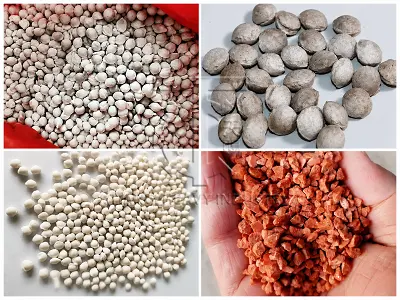
Usage: Used in the manufacture of npk compound fertilizer granules. Production capacity: 1-10t/h. Applicable materials: Ammonium chloride, potassium chloride, ammonium sulfate, mineral powder, potassium sulfate, gypsum powder, iron powder, graphite powder,etc. Granular Shape: Oblate or irregularly shape
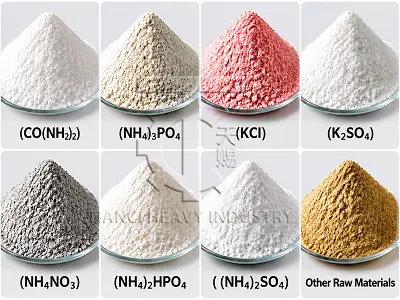
The NPK fertilizer production line is an automated production system that uses a dry extrusion granulation process to produce nitrogen-phosphorus-potassium (NPK) compound fertilizers. It is primarily suitable for small- to medium-sized fertilizer production projects with a capacity of 1–10 metric tons per hour. This production line requires no added water or steam. It uses mechanical pressure to mix and compress basic NPK raw materials—such as urea, monoammonium phosphate (MAP), diammonium phosphate (DAP), potassium chloride, potassium sulfate, and ammonium sulfate—into uniform granules, producing fertilizer granules with a particle size of approximately 2–10 mm. Depending on different fertilizer formulation requirements, the production line can flexibly adjust nitrogen, phosphorus, and potassium ratios to meet the production needs of NPK compound fertilizers and compound fertilizers of various concentrations. The NPK fertilizer production line features low investment costs, a small footprint, and a simple production process, making it particularly suitable for small- to medium-sized fertilizer plants, agricultural enterprises, and customers who need to rapidly establish production projects. If you require large-scale, continuous, high-capacity compound fertilizer production, please review our large-scale turnkey equipment: the compound fertilizer production line utilizing the rotary drum wet process.
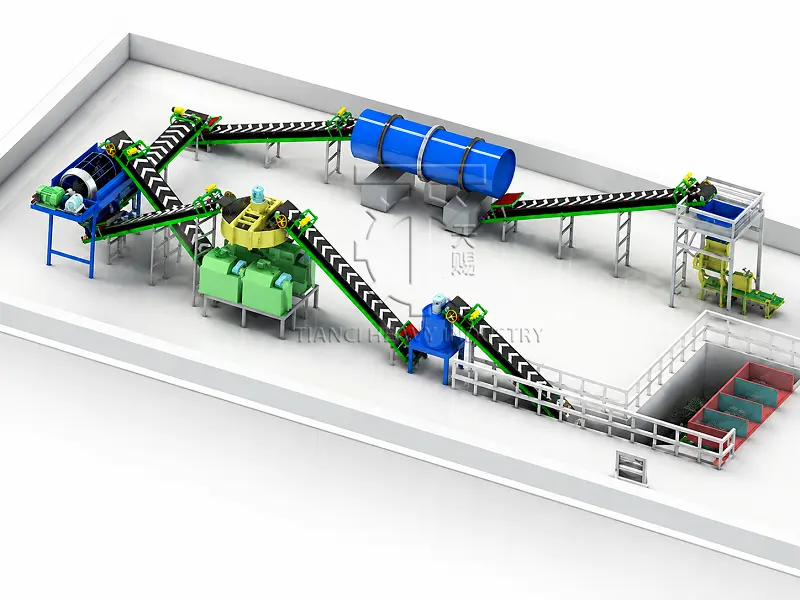
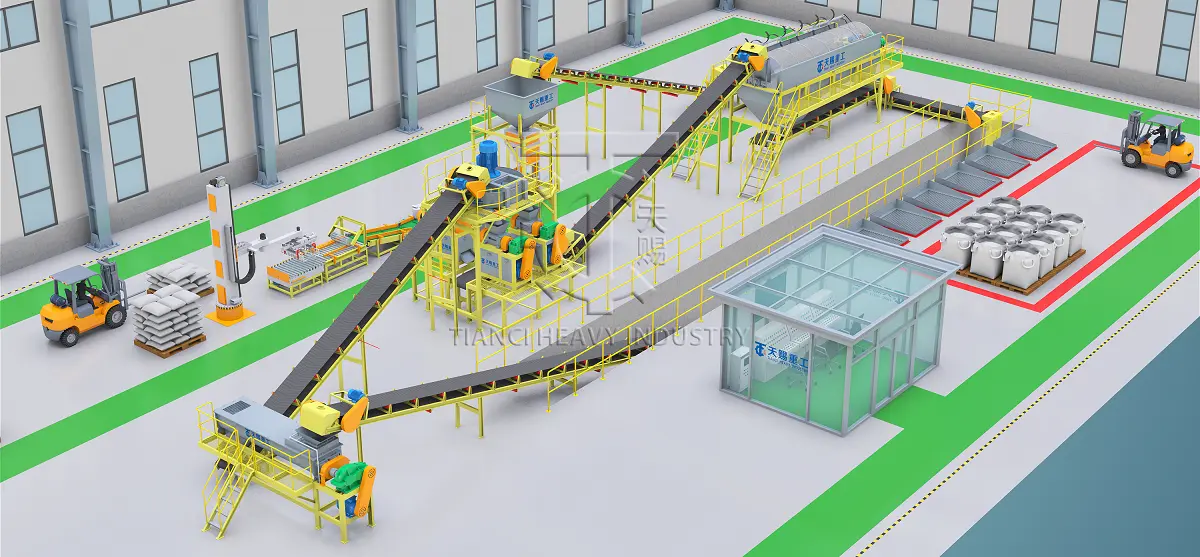
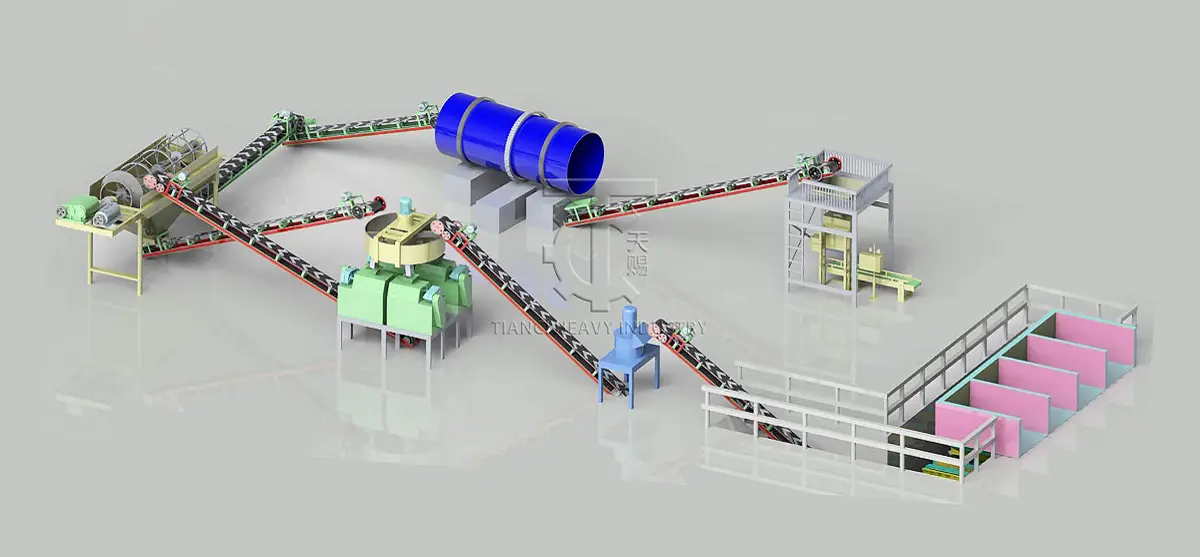
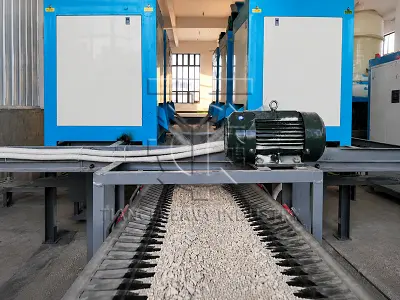
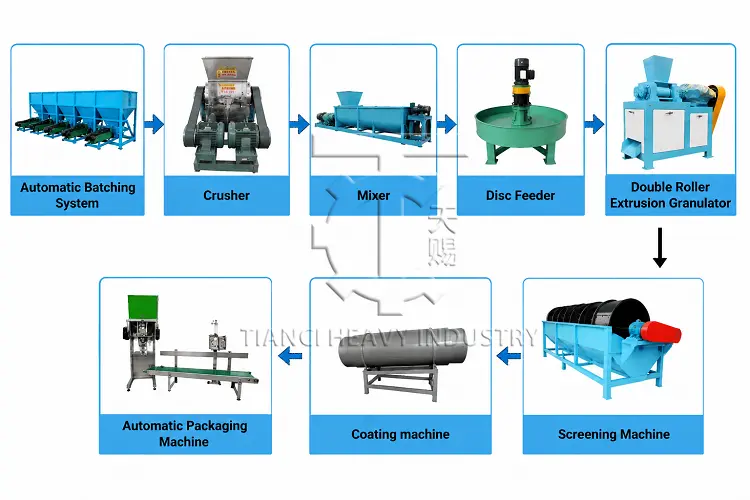
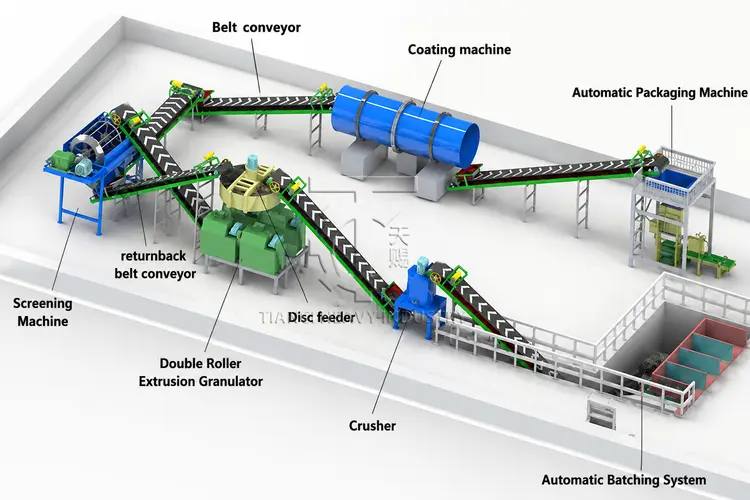
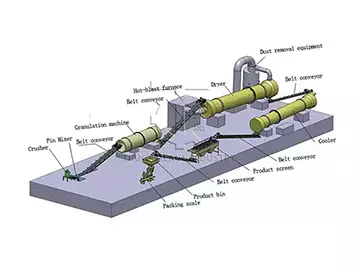
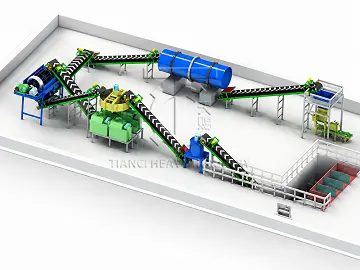
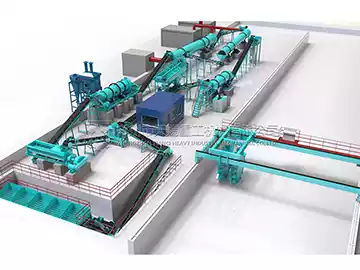
The NPK fertilizer production line primarily consists of an automatic batching system, a crusher, a mixer, a disc feeder, a double roller extrusion granulator, a screening machine, a coating machine, and an automatic packaging machine. During the production process, raw materials are first precisely measured and automatically blended. They are then uniformly mixed using crushing and mixing equipment to ensure even distribution of nutrients. The mixture is fed evenly into the double roller extrusion granulator via a disc feeder, where it is compressed into granules under high pressure. After crushing and screening, qualified granules can undergo coating as needed, followed by automatic packaging. The entire production line features a high degree of automation and stable production efficiency. It eliminates the need for drying and cooling stages, resulting in low operating costs and easy operation and maintenance. Additionally, fertilizer formulations can be quickly adjusted to meet market demands, enhancing production flexibility.
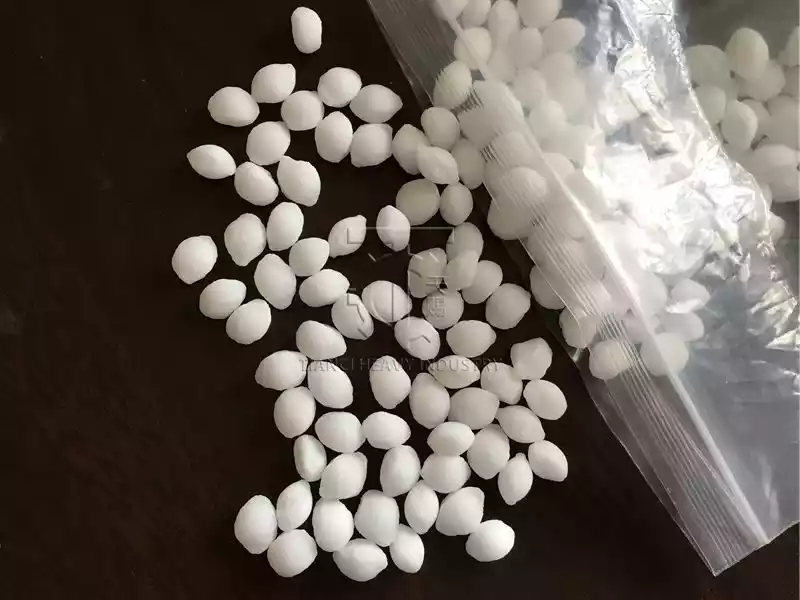
The fertilizer granules produced by the NPK fertilizer production line are characterized by uniform size, compact structure, high granule strength, resistance to breakage, and balanced nutrient distribution. These features effectively improve the stability of the fertilizer during storage and transportation. This production line is widely applicable to compound fertilizer manufacturers, chemical fertilizer processing enterprises, agricultural cultivation bases, and fertilizer project investors, and can be used to produce NPK fertilizer products of various specifications and formulations. Regardless of your raw material type, production scale, or product requirements, we can provide professional design solutions tailored to your specific circumstances. Tell us your raw materials and target output, and our engineers will customize a dedicated double roller extrusion NPK fertilizer production solution for you free of charge.
Advantages
1. Flexible Formulation The NPK fertilizer production line can flexibly adjust the ratios of nitrogen, phosphorus, and potassium according to the nutritional needs of different crops to produce a variety of compound fertilizer formulations. By controlling raw material feed rates through a precise batching system, it meets market demands for high-nitrogen, high-phosphorus, high-potassium, and specialty fertilizers.
2. Consistent Granule Quality Advanced granulation technology ensures that the produced fertilizer granules are uniform in size and compact in structure, with excellent granule strength and resistance to breakage. The finished fertilizer features a more balanced nutrient distribution, is less prone to caking, and is convenient for storage, transportation, and mechanized application.
3. High Level of Automation The NPK fertilizer production line is equipped with automated batching, conveying, granulation, screening, and packaging systems, enabling continuous and intelligent production. This reduces manual labor, improves production efficiency, and minimizes errors during the production process, ensuring more stable and reliable equipment operation.
4. Wide Range of Applications This production line is suitable for a variety of nitrogen, phosphorus, and potassium fertilizer raw materials, including urea, ammonium phosphate, potassium chloride, and potassium sulfate, and can produce NPK and compound fertilizers in various concentrations. It is widely used in fertilizer plants, agricultural enterprises, and large-scale cultivation projects.
Main Equipments
All equipments for processing compound fertilizer:
①②③④⑤⑥⑦⑧
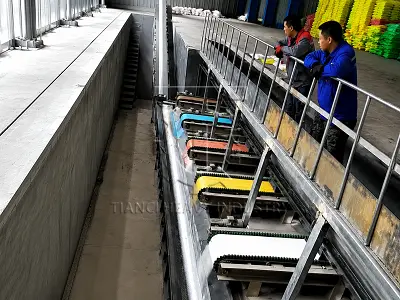
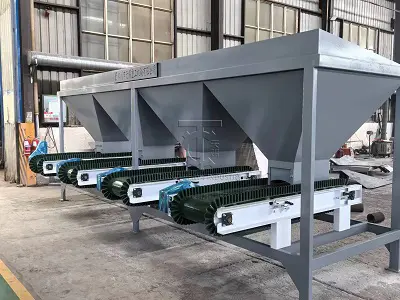
Automatic Batching System
Precisely measures various raw materials according to NPK formulation requirements and automatically controls feeding ratios to ensure uniform and stable fertilizer nutrient content.
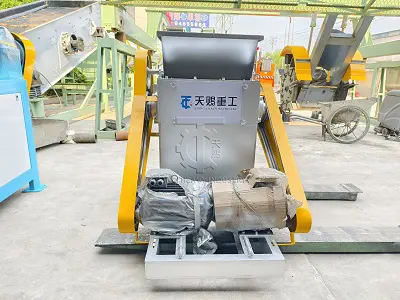
Crusher
Used to crush clumped or large-particle raw materials, bringing the material to an appropriate particle size to improve the effectiveness of subsequent mixing and granulation.
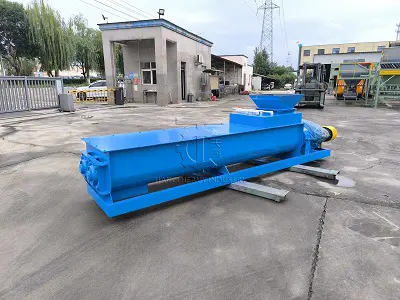
Mixer
Thoroughly blends various raw materials—including nitrogen, phosphorus, and potassium—to ensure even nutrient distribution and improve the quality of the finished fertilizer.
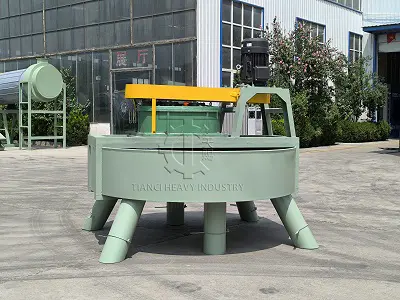
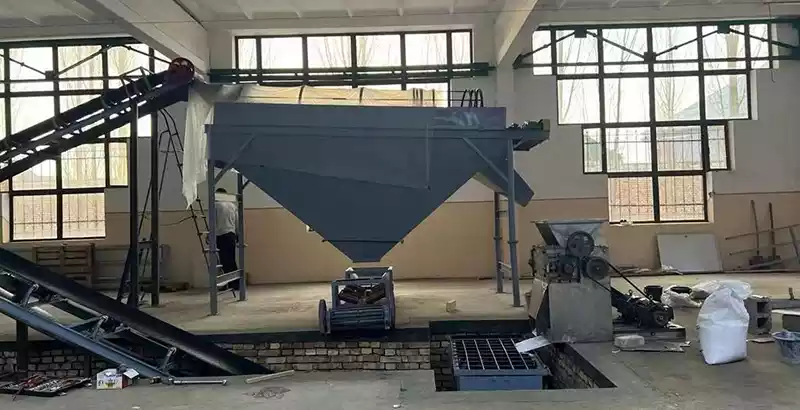
Disc feeder
Used to uniformly convey the mixed material, ensuring a continuous and stable feed rate into the granulation system and improving production efficiency.
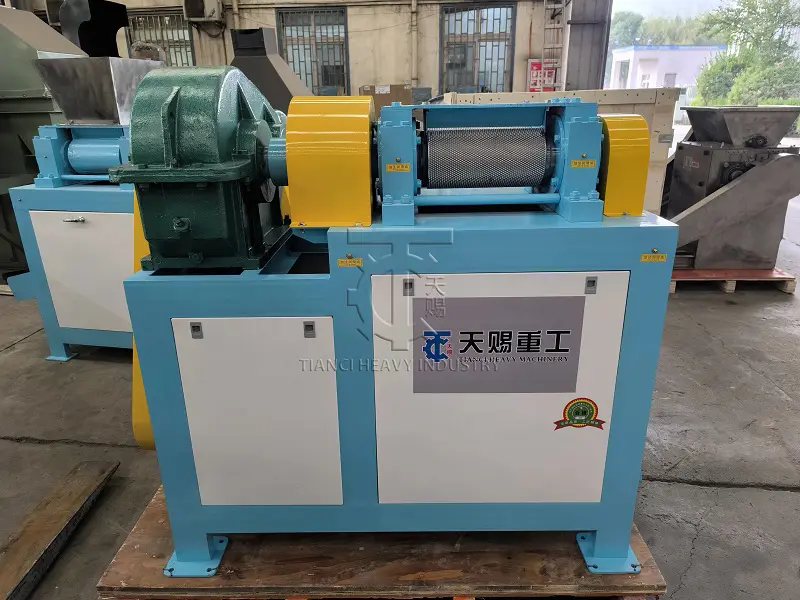
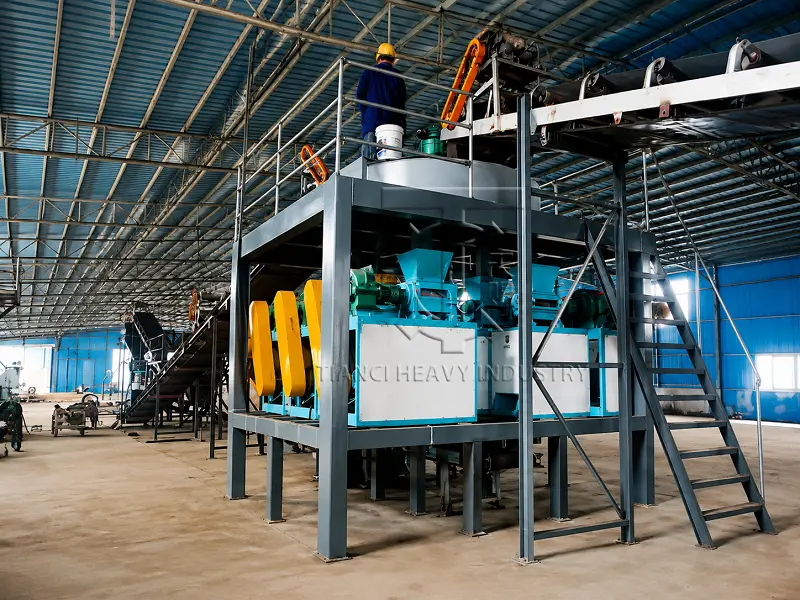
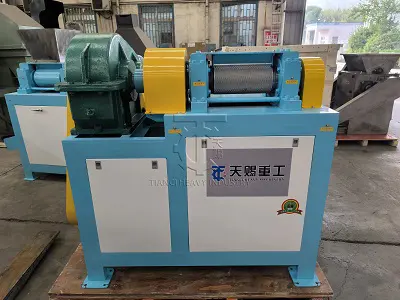
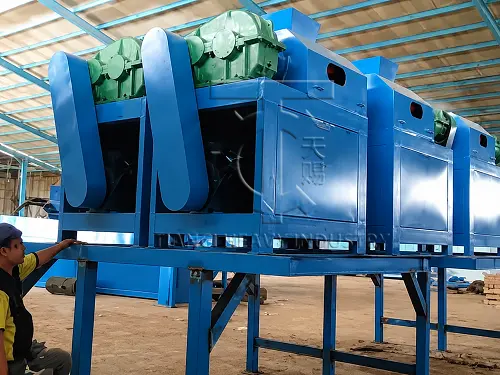
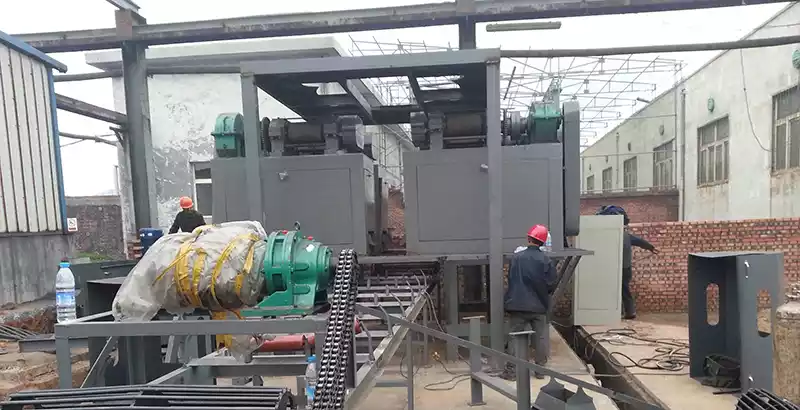
Double Roller Extrusion Granulator
Uses a dry extrusion process to compress the material into granules under high pressure, featuring low energy consumption and a high formation rate.
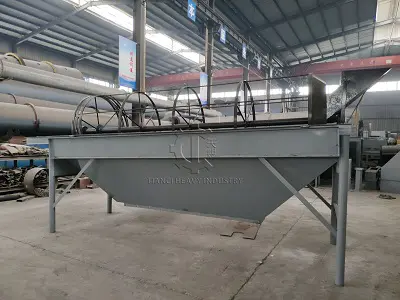
Screening Machine
Classifies and screens the granulated fertilizer to separate qualified granules from substandard material, ensuring consistent product specifications.
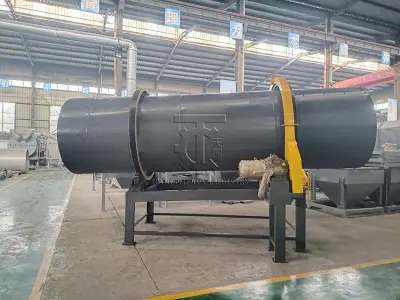
Coating Machine
Applies a protective coating to the surface of fertilizer granules to improve moisture resistance and prevent caking, thereby extending the product’s shelf life.
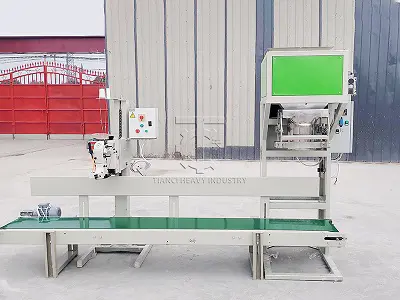
Automatic Packaging Machine
Automatically weighs, bags, and seals fertilizer, improving packaging efficiency, reducing labor costs, and facilitating product transportation and sales.
Workflow
1. Automatic Raw Material Batching In accordance with NPK fertilizer formulation requirements, nitrogen, phosphorus, and potassium raw materials—such as urea, ammonium phosphate, potassium chloride, and potassium sulfate—are precisely weighed and automatically conveyed according to preset ratios. This ensures accurate proportions of various nutrients and provides a stable foundation for subsequent mixing and granulation.
2. Raw Material Crushing Some raw materials entering the production line may be clumped or have excessively large particles. These must be processed through a crusher to achieve the fineness required for mixing, increase the contact area between different raw materials, and ensure a smoother subsequent production process.
3. Material Mixing and Agitation After crushing and batching, the various raw materials enter the mixer, where they are thoroughly agitated to ensure uniform distribution of nutrients such as nitrogen, phosphorus, and potassium. Thoroughly mixed material improves the consistency of fertilizer nutrients and provides high-quality feedstock for subsequent granulation.
4. Uniform Feeding The mixed material is continuously and uniformly conveyed via a disc feeder, delivering it steadily into the twin-roll extrusion granulator. This process prevents equipment instability caused by uneven material supply and enhances the continuous production capacity of the entire production line.
5. Double Roller Extrusion Granulation The uniformly mixed material enters the double roller extrusion granulator, where it is compressed and shaped under high pressure by two extrusion rollers, transforming the powdered material into fertilizer granules with a certain degree of strength. The typical granule size produced is 2–10 mm.
6. Granule Screening After granulation, the fertilizer enters a screening machine, where it is sorted by particle size. Qualified granules proceed to the next process, while oversized granules or powder that do not meet requirements are returned to the beginning of the line for reprocessing, thereby improving raw material utilization and finished product quality.
7. Fertilizer Granule Coating The screened, qualified fertilizer granules enter the coating machine, where a protective coating is applied to improve the surface properties of the granules. This enhances the fertilizer’s resistance to moisture and caking, improves the product’s appearance, and extends its storage and transportation life.
8. Automatic Weighing and Packaging The processed finished fertilizer enters the automatic packaging machine, where precise weighing, bagging, and sealing operations are performed to ensure rapid packaging of the fertilizer products. This automated packaging process improves production efficiency, reduces labor costs, and facilitates subsequent transportation and sales.
Working Project
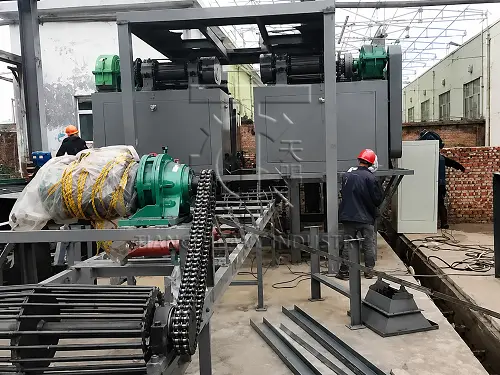
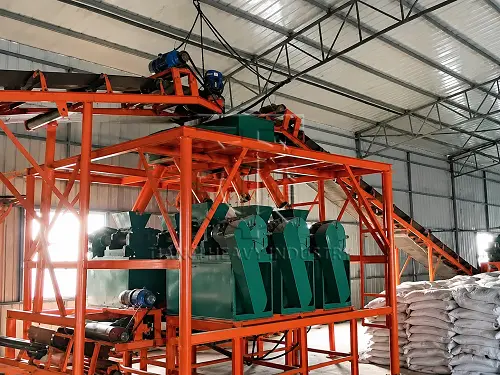
With over two decades of deep expertise in the fertilizer equipment manufacturing industry, our NPK fertilizer production lines have been successfully deployed in fertilizer production projects across numerous countries and regions worldwide. These lines have maintained stable operation in actual production, enabling us to accumulate extensive project implementation experience and develop mature compound fertilizer production processes. Leveraging our comprehensive technical service system, we provide one-stop services ranging from production line design, equipment selection, process planning, and installation guidance to commissioning and start-up, ensuring an efficient and smooth project construction process.
Based on your specific needs, we will tailor a scientific and reasonable NPK fertilizer production solution for you, taking into account the characteristics of your raw materials as well as your target output, product formulations, plant conditions, and production requirements. By optimizing key processes such as automatic batching, mixing, granulation, screening, coating, and packaging, we enhance the automation level and operational efficiency of the production line. This ensures that the finished fertilizer granules are uniform, with stable nutrient content and reliable quality, helping our customers achieve long-term, efficient, and safe fertilizer production operations.
Delivery
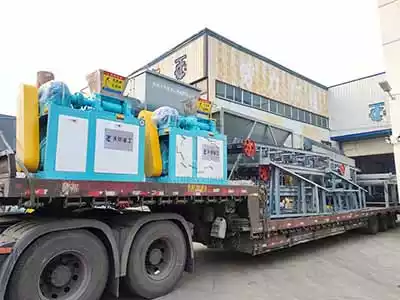
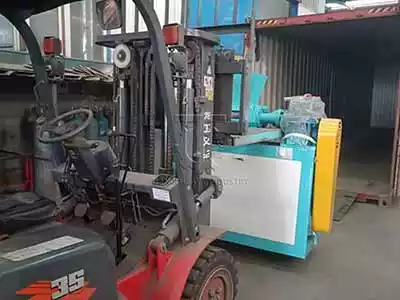
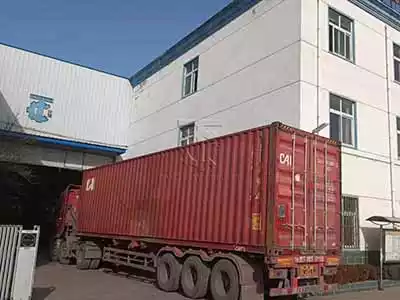
Our NPK fertilizer production lines have been successfully exported to numerous overseas markets, including Asia, Australia, Africa, the Middle East, and South America. Leveraging our proven manufacturing processes, comprehensive export procedures, and extensive experience in delivering international projects, we provide you with reliable and efficient equipment delivery services. From the completion of equipment production to on-site installation, we have established rigorous quality inspection and logistics management systems to ensure that every NPK production line arrives safely and on time at your site.
Prior to shipment, we develop a specialized packaging plan based on the equipment configuration, structural characteristics, dimensions, and transportation distance of the NPK fertilizer production line. For large and main equipment, we use wooden crates or 20GP and 40HQ containers for proper loading and transport; for critical components such as motors, control cabinets, and spare parts, we employ moisture-proof, impact-resistant, and reinforced packaging to minimize the risk of damage during long-distance transport and ensure the equipment remains fully functional.
With our professional international trade team, we can assist you throughout the entire process—including equipment inspection, export customs clearance, transportation arrangements, document preparation, and logistics tracking—to ensure the NPK fertilizer production line export process runs efficiently and smoothly. Whether your project is located in Asia, Australia, Africa, Europe, the Middle East, or South America, we will provide you with reliable fertilizer production solutions based on strict quality standards and professional delivery capabilities, helping your fertilizer project achieve rapid installation and commissioning, as well as long-term, stable operations.
Create a simple and convenient service experience for you anytime, anywhere.